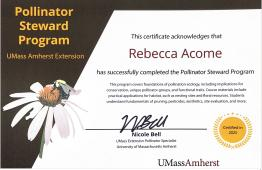
Gift certificates are available for Sweetgum Horticulture's Ecological Garden Consultations. These make great birthday, thank-you, housewarming, or Mother’s Day gifts.
 Gardens designed for the good of the Earth.
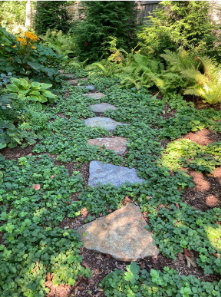
Amidst a fast-paced world and a changing climate, the role of the home
landscape has shifted and taken on new significance. Increasingly, gardens
have become a sanctuary from the outside world, places that support
diverse species of plant and animal life, and sustain the natural processes
of a thriving ecosystem.
At Sweetgum Horticulture, we honor an ecology of resilience and connectedness and are committed to the well-being of the Earth. As our understanding of the home landscape shifts—from that of an individual property to one that is encompassed within a larger network of connected yards and natural areas—we recognize the significance each property plays in the resilience of the whole.
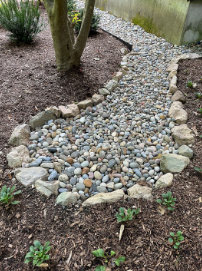 With the increasing loss of wild habitats, it becomes essential for gardens to perform the varied ecological functions of natural ecosystems including:
- Sequestering carbon and pollutants like heavy metals
- Absorbing excess nutrients, such as phosphorus, that contaminate our waterways
- Filtering stormwater
- Tempering and cooling urban and suburban temperatures
- Serving as native plant sanctuaries
- Providing habitat for many species of wildlife including insects and animals
- Securing a food supply for pollinators and songbirds
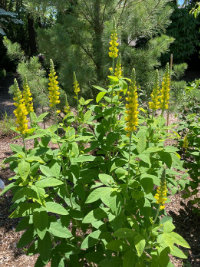
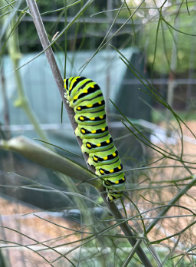 Empowered by this vision, we design landscapes rooted in the principles of a self-sustaining and resilient ecosystems that are able to adapt to and mitigate the effects of climate change.
We often ask ourselves “what can our gardens do for the good of the earth?”
Nurturing harmonious and resilient plant communities.
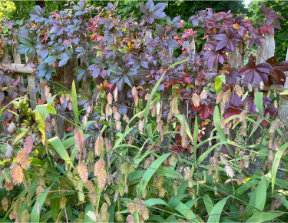 Aligned with this new ecological framework, we turn our sights on designed plant communities. When we study plants in the wild, we notice that they exist in diverse, self-propagating and naturally- occurring communities. We also notice the dense ground cover they form, the lack of exposed soil, and the myriad of ways that plants have found to adapt to their natural surroundings. As we select species for a new garden, we look for a diverse set of plants with strong genetics that will yield a harmonious, optimally functional and resilient community.
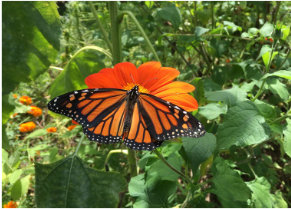
A well-designed plant community is: diverse, resilient, adaptable, self-propagating, self-correcting and self-sustainable.
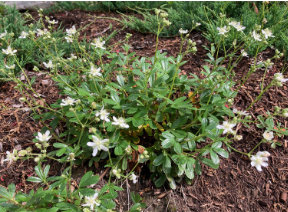 The rich assortment of plant choices we utilize include genetically diverse and seed-grown native species, select nativar species that can attract and serve as a food source for pollinators, and other non-invasive species with specific traits. The effect of this careful selection ensures overall functionality, self-sustainability and adaptability of the whole community. Such a garden in turn will have a dense ground covering and will allow plans to grow, change and adapt naturally over time.
Creating places for our creative spirit to soar.
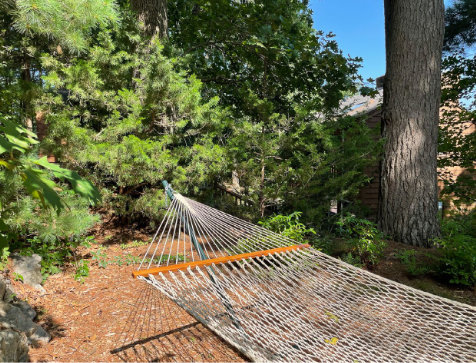
While this community-based approach of planting is good for the Earth, it is also good for us. In our current times, gardens are a refuge from the pressures of the outside world, a perfect antidote to our screen-induced isolation. They are a place where we can refresh our spirit and recharge our energy before going about our work. Gardens give us the possibility and space to become present and connect with our curious, creative spirit. When designed around diverse plant communities, gardens attract pollinators and songbirds. They nourish all our senses and encourage us to connect to a greater sense of life beyond our own.
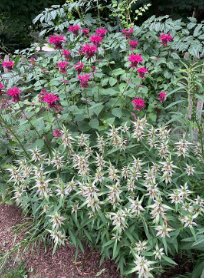 Our gardens are an invitation and a pathway to experience the rich tapestry of sights, sounds, scents, textures and colors. Amidst bird sing songs, flashes of wings and pungent bursts of color, they offer ever-changing surprises encountered in every season. At Sweetgum Horticulture, we recognize the physiological and psychological importance of being in nature, or ecotherapy, and what Japanese culture recognizes as “forest bathing.” The unique and varied natural spaces we design allow our clients to fully bask in the surrounding atmosphere and rediscover their connection to nature.
“When I am finished...that is when it starts.”
- Piet Oudolf
“Gardens once were a refuge from the wild, but now we turn to them for an experience of the natural world.”
- Thomas Rainer and Claudia West, PLANTING IN A POST-WILD WORLD: Designing Plant Communities for Resilient Landscapes
“A garden is more than an artfully arranged collection of plants and other elements, more than a simple evocation of nature. It is a wellspring of human memory and emotion. It has its own sense of narrative, its own meaning, for those who live and work there as well as those who simply come to visit.”
- W. Gary Smith, From Art to Landscape
“Truly great planting reminds us of a larger moment in nature—when a group of garden plants makes you feel like walking through a meadow, or hiking through a dark forest, or entering into a woodland glade.”
- Thomas Rainer and Claudia West, PLANTING IN A POST-WILD WORLD:
Designing Plant Communities for Resilient Landscapes

 Perhaps you have inherited a landscape with shrubs that were planted ten or more years ago, and they have become overgrown, or your perennial garden has turned into a chaotic jumble. I can develop a plan of action that will breathe new life into these garden areas. Through selective removal, pruning, dividing and re-organizing we can update your landscape so that it looks balanced and vibrant again.
 ur entire landscape and figure out what is and isn’t supporting your outdoor living needs. We can identify priorities in accordance with your budget, and work out a time schedule for the installation of the design. After our discussion, I can provide freehand sketches as a starting-off point for your do-it-yourself gardening adventures. Or if you prefer to hire a contractor, I can return to carefully measure your property and develop a detailed design that can be used to install your ideal landscape.

 Amidst a fast-paced world and a changing climate, the role of the home landscape has shifted and taken on new significance. Increasingly, gardens have become a sanctuary from the outside world, places that support diverse species of plant and animal life, and sustain the natural processes of a thriving ecosystem.


 The rich assortment of plants we choose includes genetically diverse and seed-grown native species, select “nativars” that can attract and serve as a food source for pollinators, and occasional non-native species with important traits like rabbit-resistance. The effect of this careful selection ensures overall functionality, self-sustainability and adaptability of the whole community. Such a garden in turn will have a dense ground covering and will allow plans to grow, change and adapt naturally over time with a minimal amount of care.
 While this community-based approach of planting is good for the Earth, it is also good for us.
 Spending time in our gardens is a therapeutic exercise in mindfulness, as they are an invitation to nourish all our senses with a rich tapestry of sights, sounds, scents, textures and colors. Amidst birdsong, flashes of tiny wings and vibrant bursts of color, our gardens offer unexpected moments of joy in every season.