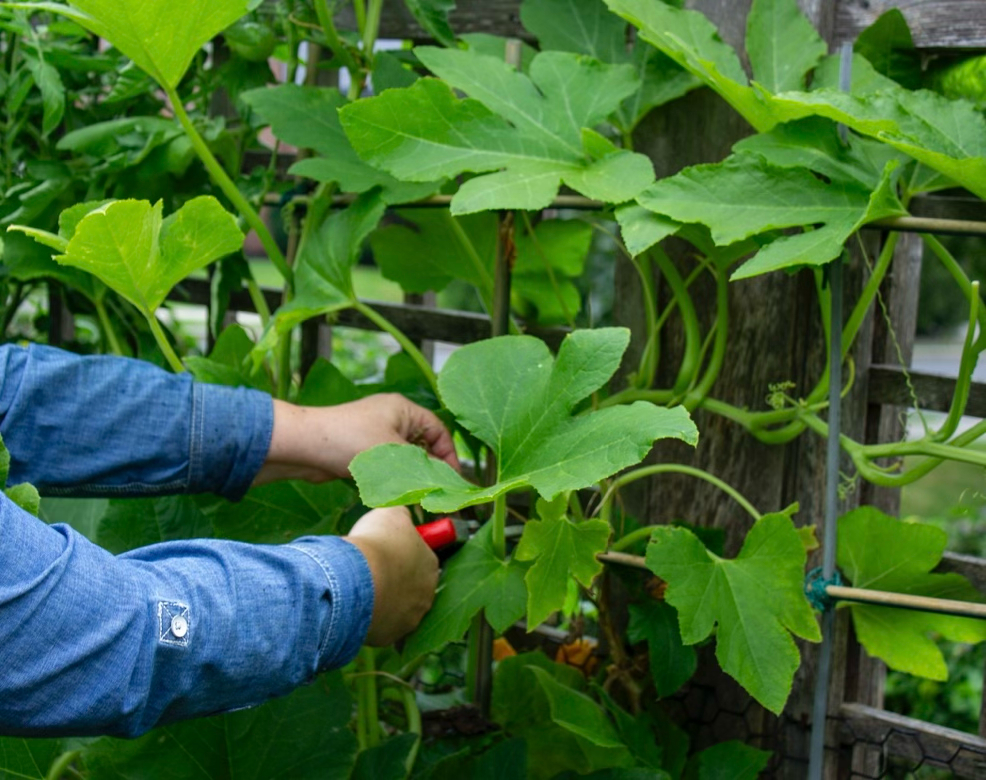
Selective care of squash (Cucurbita sp.) preserves healthy foliage.
Most people think of garden care as a checklist of chores. Cut this back. Rake that out. Make everything look neat again. But an ecological garden doesn’t live by a checklist. It lives by rhythm. It changes shape month to month and year to year. When you care for a garden this way, you stop forcing it into a tidy box.
That’s how we practice fine gardening at Sweetgum.
Fine gardening is all about observation. It involves noticing how plants grow into a bed and how they respond to weather, soil, and each other. It’s understanding when to step in and when to leave something alone. It’s not about making a garden “perfect” on a single visit. It’s about guiding a landscape so it stays healthy and enjoyable for many years, not just a single season.
When we walk into a client’s garden, we carry that mindset with us. We begin by observing the structure of the garden: its natural layers of tall, middle, and ground-cover plants. If any of those pieces start to slip out of balance, the whole garden feels it. That’s why we edit rather than rip. We thin rather than shear. We wait rather than rush. Plants respond better when you work with their timing.

Careful observation guides care that respects woodland habitat.
This approach also protects the wildlife that depends on the garden: caterpillars on leaves, bees nesting in the soil, insects sheltering in stems. A quick cleanup can wipe out an entire season’s worth of life. A thoughtful cleanup, however, keeps the beauty homeowners want while leaving enough habitat for the garden to remain ecologically strong. We take that responsibility seriously, even when the work appears subtle.
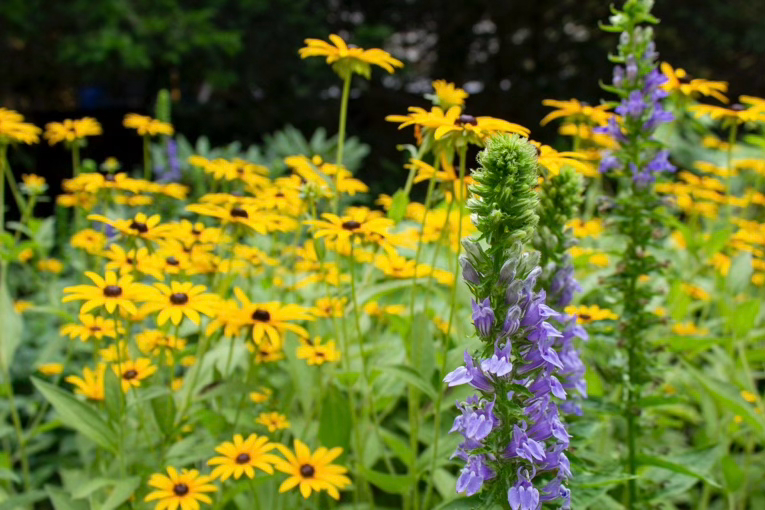
Great blue lobelia (Lobelia siphilitica) feeds bumblebees among black-eyed Susans (Rudbeckia spp.).
Fine gardening also includes the small decisions that make a landscape feel cared for. Our philosophy of “cues to care” shows up in practices such as straightening a leaning plant before it snaps, cutting back only what is finished (not everything at once), editing a bed so each plant has room to breathe, and watering deeply rather than often. These actions rarely appear on a standard maintenance list, but they add up to a garden that looks good in July, holds through August, and still has shape in January.
Clients often tell us that the garden looks “put together” after our visit rather than dramatically changed. That’s the essence of fine gardening: not forcing the garden into something it isn’t, but helping it become the best version of what it already wants to be.
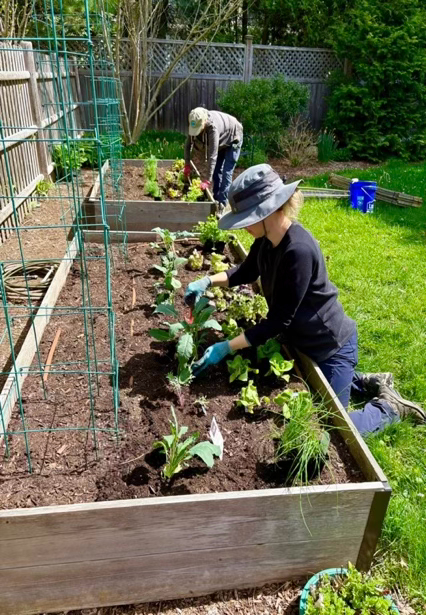
Tending food crops by hand allows close observation of plant health.
This gentle, ecological approach is the foundation of our work. Our maintenance team cares for gardens through the full season, guiding them month by month and adjusting as the plants grow.
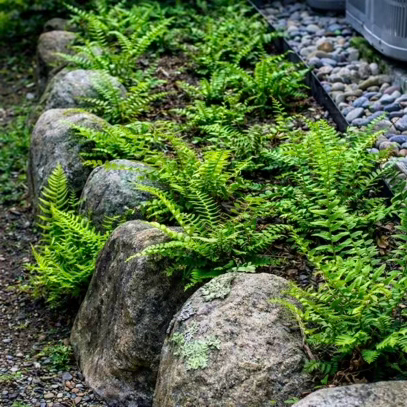
Ferns and low groundcovers shelter the soil between stones.
If your beds are ready for our team’s expert care, check out our Garden Care Service. We are ready when you are!
Text by Christine George. Photos by Allison Conwell and Christine George. Copyright Sweetgum Horticulture 2026